



In this review, I take a deep dive into the iBasso DX260 MK2 Digital Music Player (DAP). The DX260 MK2 features an octa DAC chip matrix, a snappy operating system and some beefy power output. It’s priced at 949 USD.
Disclaimer: This sample was provided by iBasso in exchange for an honest review. All observations and opinions here are my own, based on my experience with the product.
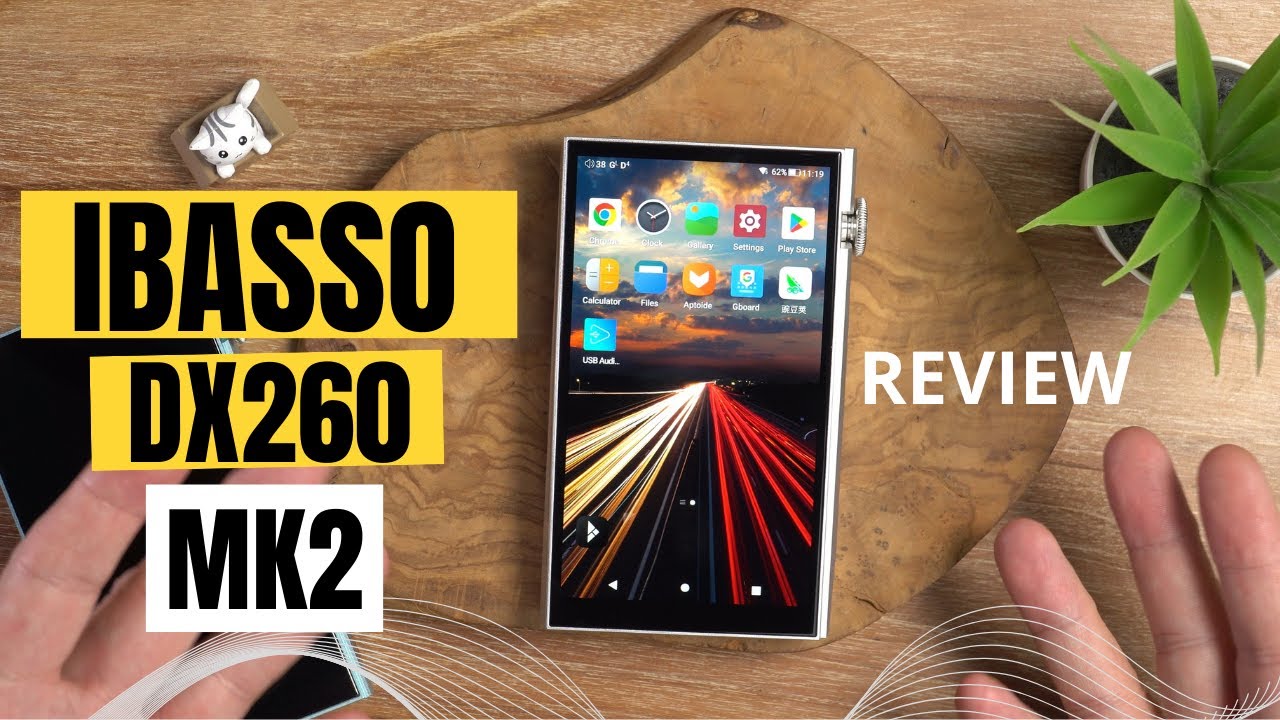
iBasso DX260 MK2


Build & Functions
The iBasso DX260 MK2 is essentially a revamped version of the original DX260. As far as I know, the external build and design remain unchanged (I don’t own the original). The differences lie beneath the surface, starting with the 8 Cirrus Logic CS43198 DAC chips. Additionally, there’s an upgraded SoC chipset – the DX260 MK2 has a Snapdragon 665 Chipset, whereas the classic model had a Snapdragon 660. The DX260 MK2 replaces the OG’s 14nm 660 chipset with the newer 11nm 665, offering better speed and efficiency.
The internal storage has also been bumped up from 64GB to 128GB, effectively doubling the capacity. Furthermore, the storage has been upgraded to the faster UFS (Universal Flash Storage), whereas the original model had eMMC memory. UFS supports full-duplex transfers, meaning it can read and write data simultaneously (unlike eMMC, which does one at a time).
The operating system has been updated too, to Android 13, compared to 11 on the OG model. You get the flexibility of a dual interface here, with Android 13 for apps and connectivity, plus iBasso’s Mango OS for a more focused music player environment.
iBasso’s audio system controller has been upgraded to FPGA-Master 2.0. In this design, the FPGA requests audio data directly from the SoC, which helps maintain signal integrity. It operates with picosecond-level precision (a picosecond is one trillionth of a second) and manages the DAC clock and data to build the FIR filter. The FIR filter plays a key role by averaging the timing differences between the multiple DAC chipsets, reducing distortion and improving overall performance.

Using the iBasso DX260 MK2
Thanks to its Snapdragon 665 SoC and 4GB of RAM, the DX260 MK2 feels fast and responsive. The processor easily handles apps like YouTube, web browsers, and music players, and with Google Play preinstalled, adding new apps is straightforward. The interface is much like standard Android, so anyone familiar with a modern smartphone will find it easy to navigate.
When running on Mango OS, the DX260 MK2 functions purely as a music player. In this mode, there are no notifications, Bluetooth, or wireless activity, which reduces interference and EMI. Mango OS is essentially a purist mode designed to deliver the best possible audio quality.
A thoughtful feature of the DX260 MK2 is its smart power circuit, which bypasses the battery when external USB power is sufficient. This reduces heat, minimises wear, and helps extend battery life. This is especially useful when using the DX260 MK2 as an external DAC. Furthermore, the dedicated receiver supports both ASIO and WASAPI. And if the battery does eventually need replacing, iBasso’s removable backplate design makes swapping it out quick and simple.
I like the overall user experience of the iBasso DX260 MK2, both in terms of software and button layout. However, I do have one gripe, the same as with the DX180: the volume wheel and buttons are too easy to press. I wish they had more resistance and required a more deliberate action. Too often, I’ll accidentally press a button while holding the DAP, and the volume wheel tends to turn unintentionally when putting it in or taking it out of my pocket. There is an option to disable the buttons when the display is off, which works as a partial fix, but I’d prefer firmer, clickier button presses.

Battery Life
The DX260 MK2’s 4400 mAh battery offers up to around 14 hours of playback, which is respectable for a player with this level of performance. A full charge takes roughly 2.5 hours, so even if you run it down completely, you won’t be waiting long before it’s ready to go again. While the stamina isn’t groundbreaking, it’s pretty solid when you factor in the unit’s high output power and processing capabilities.

Sound
As per usual, I tested the iBasso DX260 MK2 with a variety of IEMs, including the Yanyin Canon Pro, Spiral Ear SE6 Nebula and the FiiO FH19. For full-size headphones, I used the Sennheiser HD650 and Meze 105 AER. With 1015mW of output power from the balanced output, the DX260 MK2 can comfortably drive all of my IEMs and headphones with ease.
So, how does it sound? I’d describe the iBasso DX260 as dynamic, airy, and precise. It feels like it takes all the best aspects of my music and turns them up a notch. I’m not just talking about volume (though it can easily get loud), but the sense of engagement, scale, dynamics, and imaging all gain a new level of depth.
Tonally, it’s spot on. The DX260 MK2 delivers bass with impressive extension and authority, reaching deep without ever sounding bloated. Notes have real texture and definition, letting you hear the shape and character of each bassline. It carries plenty of rhythm and drive, giving music a sense of momentum, yet it’s tight and controlled at all times.

The DX260 MK2’s midrange is neutral and spacious, with excellent clarity and detail. Vocals and instruments come through naturally, never dry or overly analytical, and there’s a sense of openness that lets each layer in the mix breathe. The result is a midrange that feels both highly resolving and engaging.
The DX260 MK2’s treble is airy and light, extending cleanly without any hint of digital glare. It adds sparkle and clarity, giving the soundstage a sense of space and openness. Details shimmer without being forced, and the overall presentation feels natural and effortless, complementing the controlled bass and spacious midrange.
The DX260 MK2 delivers a soundstage that’s wide, deep, and holographic—almost as if you could reach out and touch the instruments. Resolution is second-to-none, thanks to the multiple DAC chipsets working in perfect sync via FPGA-Master 2.0 and the FIR filter. Separation and layering are superb, giving every element in the mix space to breathe without ever feeling disconnected.
More than anything I can describe with all the usual audiophile jargon, the iBasso DX260 MK2 is about moments. Those moments when you pause, listen, and think, “My gosh, that sounds good.” It’s the kind of playback that makes you notice the little details you never caught before, yet still feels completely natural.

Verdict
Sometimes music hits you right in the chest, in a way you can’t quite explain. The iBasso DX260 MK2 has done that for me more than any other DAP I’ve tested. And while you can absolutely have those moments with more affordable gear, there’s a reason some products cost more, even if the returns become more subtle. If you’re ready to connect with your music on a deeper level, the DX260 MK2 makes that possible. And if your budget allows, I highly recommend it.
