



The ZiiGaat Horizon is the latest and arguably most ambitious release yet from the brand that has quickly established itself as a dominant force in the budget and mid-tier In-Ear Monitor (IEM) segment since its emergence in 2023. Priced at $329 USD, the Horizon immediately signals its intent by featuring a complex tribrid driver configuration: a potent blend of one Dynamic Driver (DD), two Balanced Armatures (BA), and two custom Planar drivers. The question is—does that fancy driver configuration actually deliver exceptional sound quality? Let’s find out.
Disclaimer: This sample was provided by Linsoul for an honest review. All observations and opinions here are my own, based on my experience with the product.
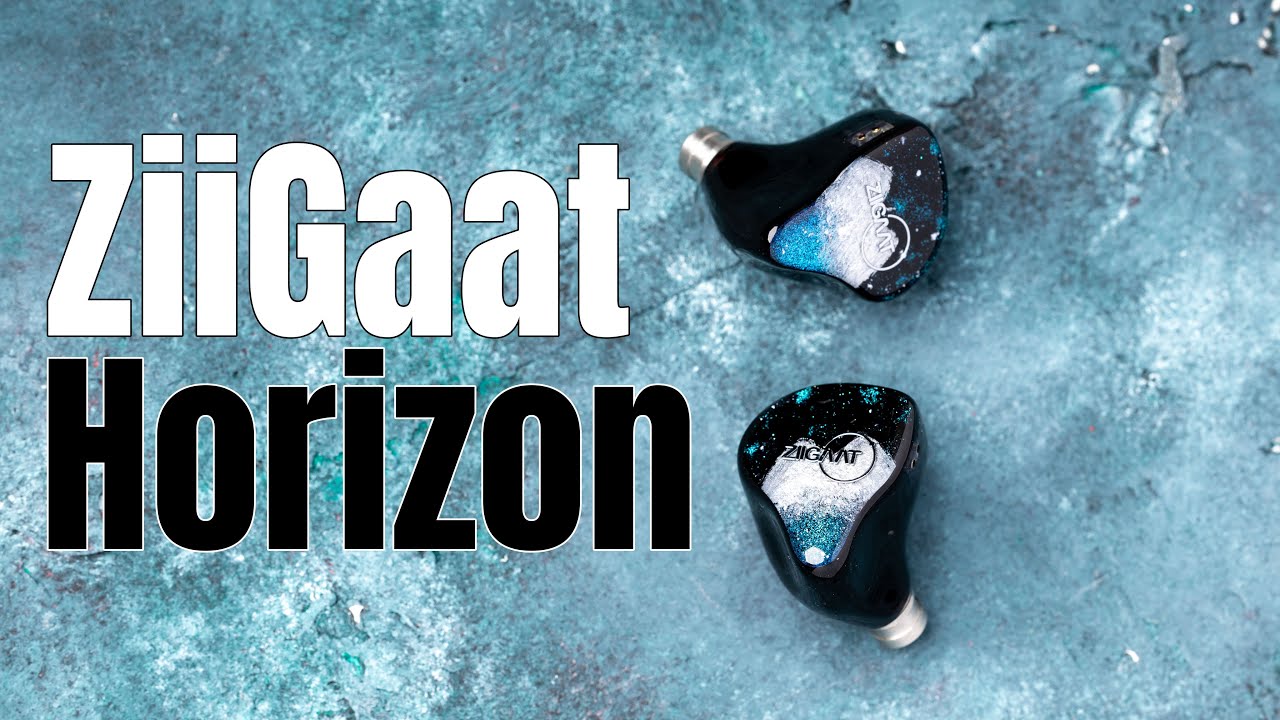
ZiiGaat Horizon
Specifications
Driver: 1DD + 2BA + 2 Planar
Driver Details: 10mm bio-diaphragm + Knowles 30262-163 + custom composite dual planar drivers
Sensitivity: 102dB
THD: 0.55%
Impedance: 24Ω
Frequency Response: 20Hz–35kHz


Inside the Box
1 × Pair of ZiiGaat Horizon IEMs
1 × Detachable 4-Core Cable (0.78mm 2-pin)
1 × 3.5mm plug
1 x 4.4mm plug
3 × Pairs of silicone ear tips (S/M/L)
3 Pairs of Transparent Silicone Eartips
1 Pair of Black Foam Eartips
1 × Premium carrying case
1 × Wearing diagram/user instruction card
1 × Warranty card

Design
The ZiiGaat Horizon follows the brand’s familiar contemporary design language, with medium-sized shells that have a smooth, pseudo-custom shape. They sit naturally in the ears and feel secure once in place. The fit is excellent—stable enough for daily use and offering impressive passive noise isolation, making it easy to stay immersed in your music without outside distractions.
The shells are crafted from opaque, glossy black resin and feature ZiiGaat’s distinctive multi-toned design, blending white, aqua, and green with shimmering foil particles beneath the surface. A silver ZiiGaat logo sits neatly at the centre, giving the faceplates a premium, eye-catching finish. They look beautiful in person—subtle at first glance, but striking when the light catches them.

The included 4-core braided cable is silver-plated copper with a glossy black sheath and 0.78mm 2-pin connectors. It feels soft and pliable in the hand, and there’s no noticeable microphonics. However, the thin upper section above the Y-splitter can be a little prone to tangling. It’s a modular design, allowing for quick swapping between the included 3.5mm and 4.4mm plugs—a thoughtful touch that adds versatility to the package.
Sound
Gear used for testing includes the FiiO KA17, iBasso DX180 and iFi ZEN DAC 3. The ZiiGaat Horizon is an efficient IEM and, as such, requires little power to drive effectively. It will easily reach satisfactory volume levels even straight from a smartphone or basic source. However, it proves to be quite responsive to source quality. While it is not demanding, pairing it with a decent dedicated amplifier or a high-quality dongle DAC will yield notable improvements.

Bass
The Horizon’s bass extension reaches deep with a sense of authority, yet it never feels heavy or bloated. There’s a real sense of control here — the sub-bass digs low, delivering clean, powerful rumble that adds excitement to big drops in music and a cinematic weight to games and movies. The mid-bass is slightly more restrained but remains tight and punchy, lending rhythm and drive without smearing into the midrange. Notes are well-textured with defined leading edges, giving kick drums and bass guitars a satisfying sense of grip and precision.
Midrange
The midrange sits in a neutral, open space with just enough warmth to sound natural and inviting. It’s articulate and finely detailed, allowing instruments and vocals to breathe. Vocals sit forward in the mix, clear and expressive but never shouty, thanks to a tastefully controlled upper midrange. String instruments carry realistic body and tone, while male vocals sound full and grounded. Guitars have a lively bite that cuts through without becoming harsh. Overall, the midrange presentation strikes a near-perfect balance between clarity, neutrality, and musicality.

Treble
The Horizon’s treble performance is a real highlight. It extends effortlessly, giving the soundstage a sense of air and space that feels open and unconfined. High frequencies are crisp and finely detailed, lending cymbals and percussion a delicate shimmer. Despite its excellent reach, the treble remains smooth and composed. There’s plenty of sparkle and brilliance, though the Horizon can be a touch unforgiving with poorly recorded material. Still, its precision and refinement make for a lively, spacious top end that ties the presentation together beautifully.
Soundstage & Technicalities
The Horizon’s technical performance is strong, leading with an impressive soundstage. The soundstage is not simply large; it is expansive. This sense of scale is largely a result of the extended, airy treble and the inherently spacious presentation of the midrange. Critically, the imaging extends into three dimensions. The soundscape is not a flat, two-dimensional plane; rather, everything is spread out in depth, height, and width, making for a realistic and immersive result.
Coupled with this staging is very good layering, which helps maintain clarity even during complex musical passages. Furthermore, the instrument separation is excellent, allowing the listener to easily track individual instruments and voices within the presentation. This cohesion and technical proficiency solidify the Horizon as a highly capable performer in its class.
Comparisons
ZiiGaat Crescent ($279 USD)

I could sum up this comparison simply by saying the Horizon feels like a more mature version of the Crescent. The Crescent carries extra body and fullness in the mid-bass and lower midrange, coupled with a bit more lift in the lower treble. This gives it a slightly more V-shaped profile, which some might find more dynamic. Aside from the bass, the biggest difference lies in the Crescent’s denser note weight, lending it a more forward and slightly thicker presentation. Both are excellent IEMs, each catering to subtly different tuning preferences.

Punch Audio Martilo ($329 USD)

When switching to the Martilo, the first thing I noticed was definitely the bass. It has notably more low-end, especially in the sub-bass, where it hits with a more forceful rumble. The midrange tuning is similar—it’s near-neutral on both, but the Martilo’s mids aren’t as spacious as the Horizon’s. Up top, the Martilo’s treble is a bit smoother and doesn’t have as much airiness or top-end extension. Essentially, it sounds a little more U-shaped overall, whereas the Horizon comes across as more linear and even across the spectrum.
Regarding the technical side of things, the soundstage on the Martilo isn’t as expansive as the Horizon. That said, it performs equally well in all the other important technical aspects, like imaging, layering, and instrument separation.

Verdict
So, where do we land after sinking hours into the ZiiGaat Horizon? This IEM is a bit of a sleeper hit for me. Why? Because the bass here has got a wonderful, unassuming depth that will surprise you with its authority, yet it never messes with the vocals, and that treble extension is brilliant—it pours tonnes of air into the mix, giving you an expansive soundstage.
But what truly elevates the sound is the way the soundscape opens up. Everything feels properly spread out and detailed without ever becoming thin or fatiguing, even on those longer listening sessions.
It’s a tribrid done right, blending technical ability with musical enjoyment. The Horizon is a joy to listen to, and it’s a compelling IEM at this price point. If you’re looking for refined and immersive audio, this is one you should consider. Recommended.
